
plur

Νόμιμα αδειοδοτημένο ραδιόφωνο | Officially Licensed Web Radio
© 2026 plur Radio | All rights reserved.
Eclectic Underground Soundspace
When Does an Electronic Music Artist Need a Manager? Louis Godfrey Shares His Approach
28 Σεπτεμβρίου 2026 - Music News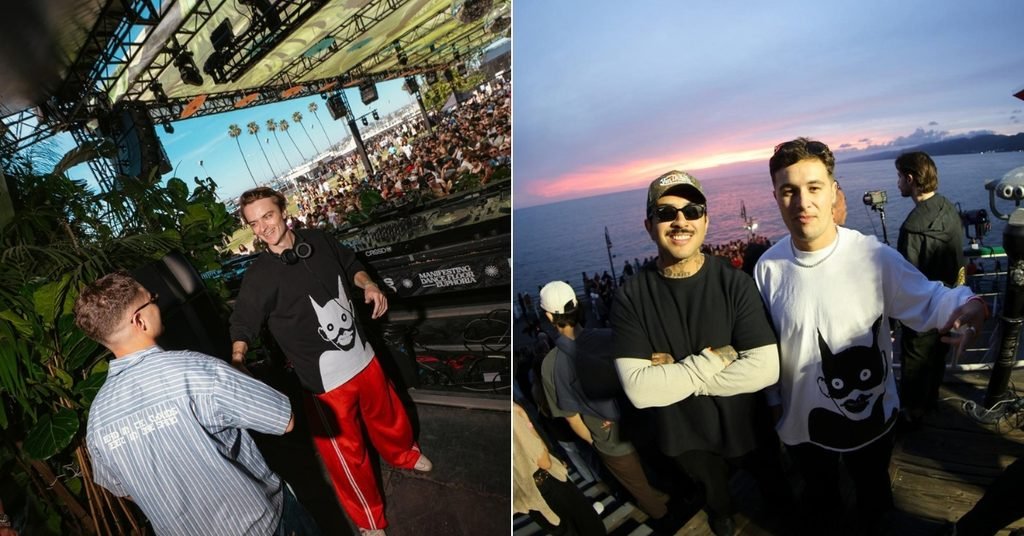
For emerging artists, knowing when to bring a manager into the picture can be difficult. Electronic music artist management can encompass everything from releases and touring to creative direction, partnerships and assembling the wider team, but Louis Godfrey believes there is something considerably more important to establish first.
“Focus on the music first, everything else will come in due time!”
Godfrey has experienced artist management at very different stages of a career. For close to four years, he worked across FISHER’s day-to-day management and creative operation, with a role spanning touring, content, artwork, brand partnerships and the wider presentation surrounding shows and releases.
At the beginning of 2026, he stepped away to establish ART @ PACE, his independent management and creative company. Instead of joining an already established global operation, the move has allowed Godfrey to work with artists much earlier in their development and help construct the foundations around them.
Brunello became ART @ PACE’s first client. Rather than immediately focusing on bookings, numbers or external opportunities, Godfrey says the starting point was understanding where the artist actually wanted to go.
“The artists’ goals and vision is the most important foundation, we defined what this was and the best way we could work towards helping him achieve that.”
It is an important distinction for emerging artists considering management. A manager can help create strategy and momentum around a project, but that becomes considerably more difficult if the artist has yet to establish their own creative direction.
Mellow Circus Records · Brunello – Midnight Lovers
There are plenty of numbers available to measure what happens next. Streaming figures, followers, ticket sales, chart positions and bookings can all provide evidence that an artist is building momentum. Godfrey, however, looks for signals that cannot necessarily be represented on a dashboard.
“Fans telling the artist that their music means something to them. Even if it is one person, that is truly what it is all about.”
That philosophy has remained important as Brunello’s profile has grown. Mellow Circus has achieved multiple Beatport number ones, but Godfrey does not see those moments as reasons to suddenly rewrite an artist’s strategy.
“Numbers are nice, but that shouldn’t mean you change course from the plan. Keep on putting out good stuff and success will follow.”
Instead, Mellow Circus has gradually developed into something broader than its releases. Sold-out events and merchandise drops have given listeners different ways to participate in the project, helping transform attention around individual records into an identifiable community.
Godfrey believes the distinctiveness of that world has been instrumental.
“Brunello’s Mellow Circus is uniquely different, and I feel like that draws people into the weirdness.”
View this post on Instagram A post shared by S P A C E (@clubspace)
For electronic music artist management, that relationship between music and audience increasingly extends beyond streaming. Records remain the foundation, but events, visual identity, merchandise and direct interaction can give listeners reasons to become invested in the wider project rather than simply encountering a track in isolation.
Touring presents another balancing act. It can accelerate an artist’s visibility considerably, but an increasingly demanding schedule can also reduce the time available to make the records that created those opportunities in the first place.
“It is important to have a good foundation of records under your belt before you hit the road. Producing while on the move definitely has its difficulties!”
That makes coordination between releases and touring particularly important. Rather than treating them as separate campaigns, a strong catalogue gives live opportunities something to build upon, while touring can subsequently introduce that music to wider audiences.
As those different parts of an artist’s career expand, so does the role of management. Godfrey’s previous experience covered touring, content, artwork and brand partnerships, but he does not believe the manager should necessarily attempt to execute every part of the operation themselves.
“Bringing in good people in key roles is the most important job of a manager, we are nothing without the team of good people around us!”
The manager therefore becomes a connecting point between the artist and an increasingly specialised team. Building the right infrastructure around a project can be just as important as identifying individual opportunities.
That principle becomes especially relevant for artists choosing to release music independently. Greater control over masters, release schedules and creative presentation can be attractive, but operating without traditional label infrastructure means those responsibilities still need to be handled somewhere.
For Brunello, Godfrey believes independence works precisely because Mellow Circus provides a natural home for the music and there is a wider team that believes in what the project represents.
“I’m a true believer that if the music is good enough, it will reach the right ears. Brunello’s sound is unique and he always felt that the home for that was The Mellow Circus. Building a team that believes in the sound is important.”
That last point perhaps best summarises Godfrey’s approach to electronic music artist management. Independence does not have to mean isolation, just as signing with a manager should not mean handing somebody else control of an artist’s creative direction.
Management works around foundations that already need to exist: good music, a recognisable artistic vision and an understanding of where the artist ultimately wants the project to go.
The streams, bookings, chart positions, touring opportunities and wider team can grow around that. For an emerging electronic artist wondering whether finding a manager should be the next priority, Godfrey’s advice brings everything back to the simplest part of the equation.
Focus on making the music worth managing first.
ART @ PACE
Instagram
The post When Does an Electronic Music Artist Need a Manager? Louis Godfrey Shares His Approach appeared first on Data Transmission.
Deer Jade drops bouncy, disco-dusted house groover ‘Take Me To’ via I AM YOU
The I AM YOUniverse expands with Deer Jade’s ‘Take Me To,’ a fun, bouncy house track built to light up dancefloors from the first drop. Tasteful trumpets and a funky bassline set the pace, while disco-dusted rhythms and house-rooted production build into a track that’s impossible to sit still to. [...]
Νόμιμα αδειοδοτημένο ραδιόφωνο | Officially Licensed Web Radio
© 2026 plur Radio | All rights reserved.
Eclectic Underground Soundspace
| Play | Cover | Release Label |
Track Title Track Authors |
|---|